Secure Access Service Edge (SASE)
Traditional security models struggle to secure users, devices and applications outside the corporate network. SASE delivers protection across all locations and cloud environments.

Secure Access Service Edge improves visibility, reduces operational complexity and strengthens protection against threats through the consolidation of critical cyber security controls.
Data Connect ensures SASE will significantly enhance your network connectivity and security with centralised controls and visibility. Have peace of mind by working with a partner who specialises in secure network access.
We offer a free 1 hour whiteboard session to discuss how SASE may be the right fit for your organisation.
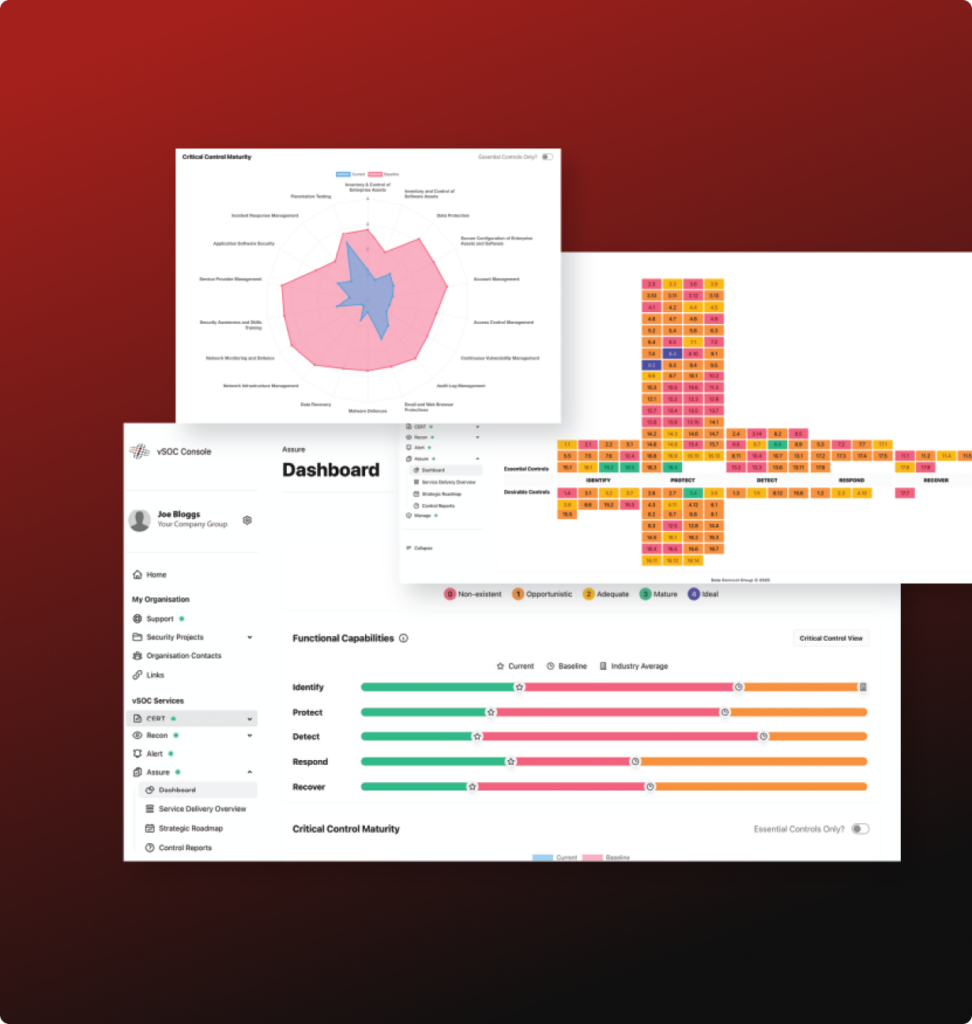
Navigate cyber risk with a trusted security partner. Pinpoint your current risk exposure and how to overcome these security gaps. Benefit from a combination of real-world risk analysis, benchmarking, vCISO support and actionable recommendations to drive strategic cyber maturity, all whilst dramatically reducing risk.
SASE integrates networking (SD-WAN) with security controls such as SWG, CASB, FWaaS and ZTNA, delivering both connectivity and protection from a single cloud-managed platform. SD-WAN can also be achieved standalone without SASE to provide for resilient internet capabilities.
Yes. SASE applies consistent access policies across AWS, Azure, Google Cloud, and other platforms, ensuring that authentication and authorisation are aligned with Zero Trust principles.
SASE routes traffic through distributed cloud points of presence, reducing latency and improving connection reliability for remote and hybrid teams, while still enforcing security policies.
CASB monitors and enforces security policies for cloud applications, ensuring data protection, compliance, and visibility into shadow IT activity within a SASE framework.
Policies are centralised in a cloud management plane, allowing administrators to apply rules across all users, devices, sites and cloud workloads. Updates propagate automatically without manual configuration on individual endpoints.
It depends on the desired architecture. On-premise firewalls may remain to be used to simply ensure resilient access to SASE services through SD-WAN or may used for LAN segmentation in support of the wider security architecture. Typically requirements for on-premise firewall are greatly reduced which will save licensing costs and management overheads. In some cases only a router may be desirable.